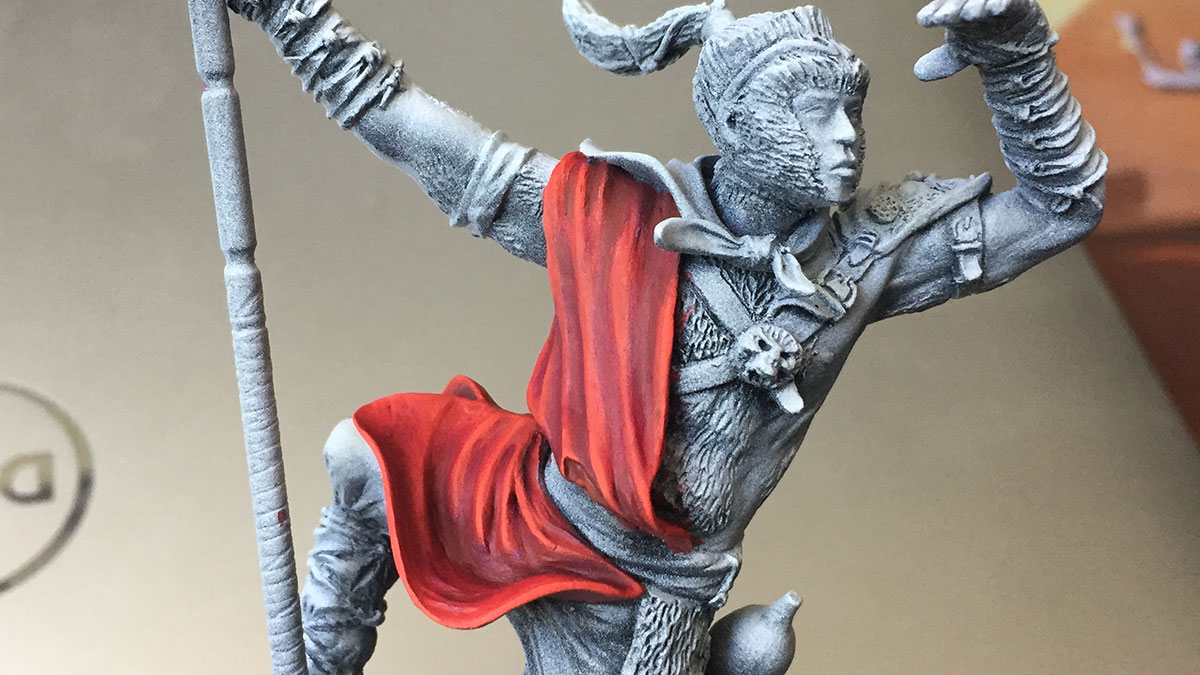
Its been sometime between assembling and priming Monkey and actually laying down some paint. I wish I could say I haven’t had the time, but that’s simply not true. I’ve been looking for – and finding – any excuse to not sit down and paint. Its something that I think a lot of artists struggle with; for me, once I’ve started, I can’t paint for hours and enjoy every minute of it. But actually getting started is difficult.
I suspect in this case, it coming from a place of fear. I’ve painted something of this scale, and being a perfectionist I’m worried I’ll never be able to achieve the result that matches the crystal clear image of the finished piece I have in my head. In the end, I just had to force myself to get started. I gave the desk a quick clean, prepped my palette, gave Monkey a bit of a clean (he’d been sitting dormant for a while, and I was worried that he’d gathered a bit of dust) with a brush and a once over with an empty airbrush – using the air to clean the surfaces – and got started.
The King gets his new clothes
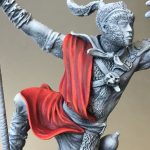
I started with his tunic, which was always going to be a rich red colour. Perhaps part of this derives from the 80’s TV show, but I always picture him having a strong, predominant area of red. Red is a colour I’m fairly confident working with. Some colours I struggle with, but I’ve always been comfortable working reds. I can’t say exactly why; it is one of my favourite colours, so that might help. I’ve built up a large range of red paints over the years also, so I’ve got plenty of options with a wide variety of different tones.
I had a fairly clear game plan going into this step. Starting with mid tones, then shadows I’d try and block out the basic shapes of the colour, trying to use the zenithal highlighting to guide me in terms of light shadow, and volume. Despite starting out with a set of three reds I’d use for highlights, mid tones and shadows (at least for the initial pass) I ended up using no less than 8 different reds. I just embraced the process; rather than try and stick to any preordained plan, I rolled with, not getting too caught up on mistakes.
Confession time.
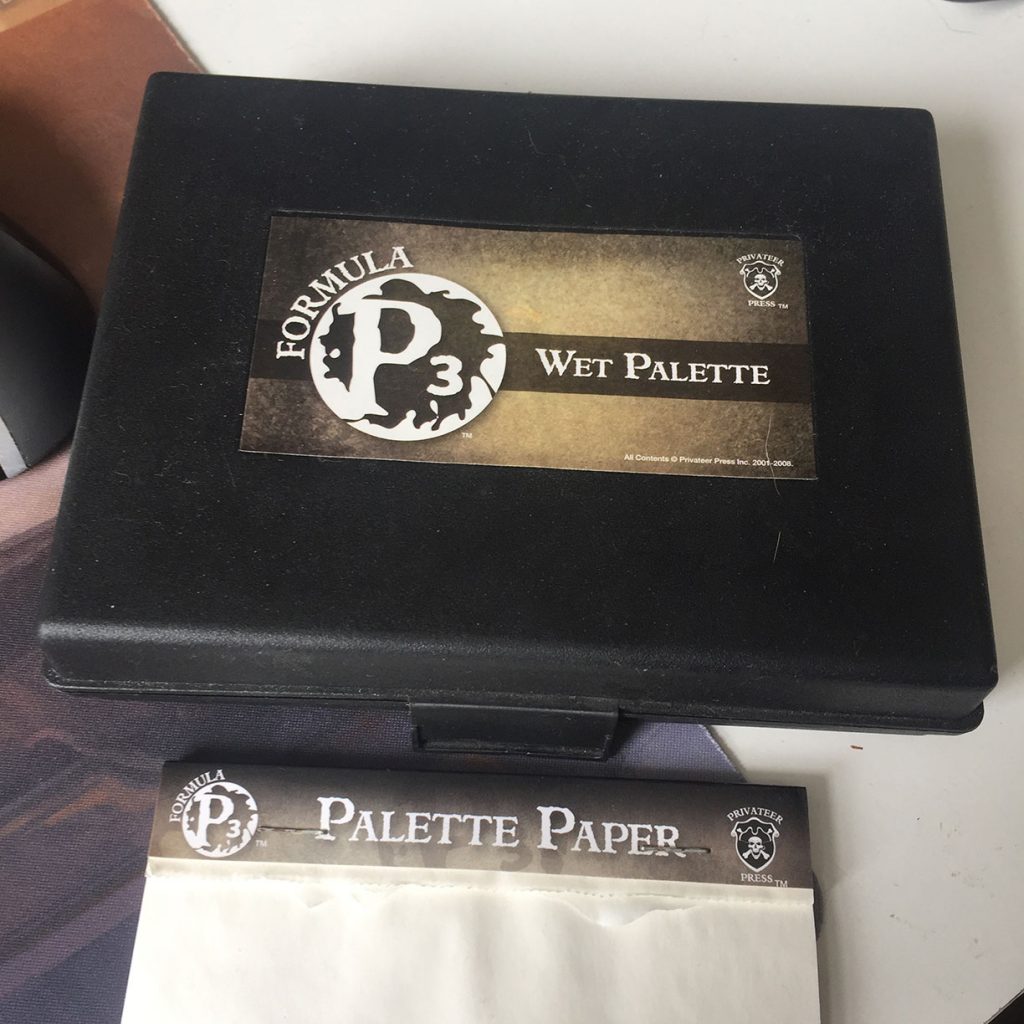
I rarely thing my paints. It’s bad, and I know it. I know I could get better results if I did, and when I do thin my paints, I definitely notice the difference. Here’s the truth – I’m lazy. Don’t be lazy. Thin your paints. Get a cheap wet palette if you can, but they’re easy to make yourself.
Glazing and wet blending
Given my reluctance to thin paints, I was determined to break this habit. I can get away with not thinning on smaller figures, and when painting rank and file wargaming troops, it certainly helps speed things up if I avoid thinning. But on a piece this big, which is purely for display purposes, I knew thinning would a requirement.
Additionally, I was keen to try a slightly different approach to usual. Using the wet palette, I was thinned my paints right down to a glaze; a very thin, translucent style of paint that allows base colours – and in this case – the tones of the priming to come through. Colours needed be built up over several layers, but that helped with blending the still wet paint together to gradually build up the highlights and shadows.
It can be a slow process, but the end result is oven a lot smoother, with gradations between colours and tones a lot less noticeable. Once thing I really tried to do, was to capture the overall volume of the figure itself, not just the volume of the folds in his tunic, but where they sit on his body, again using the zenithal priming to guide my paint.
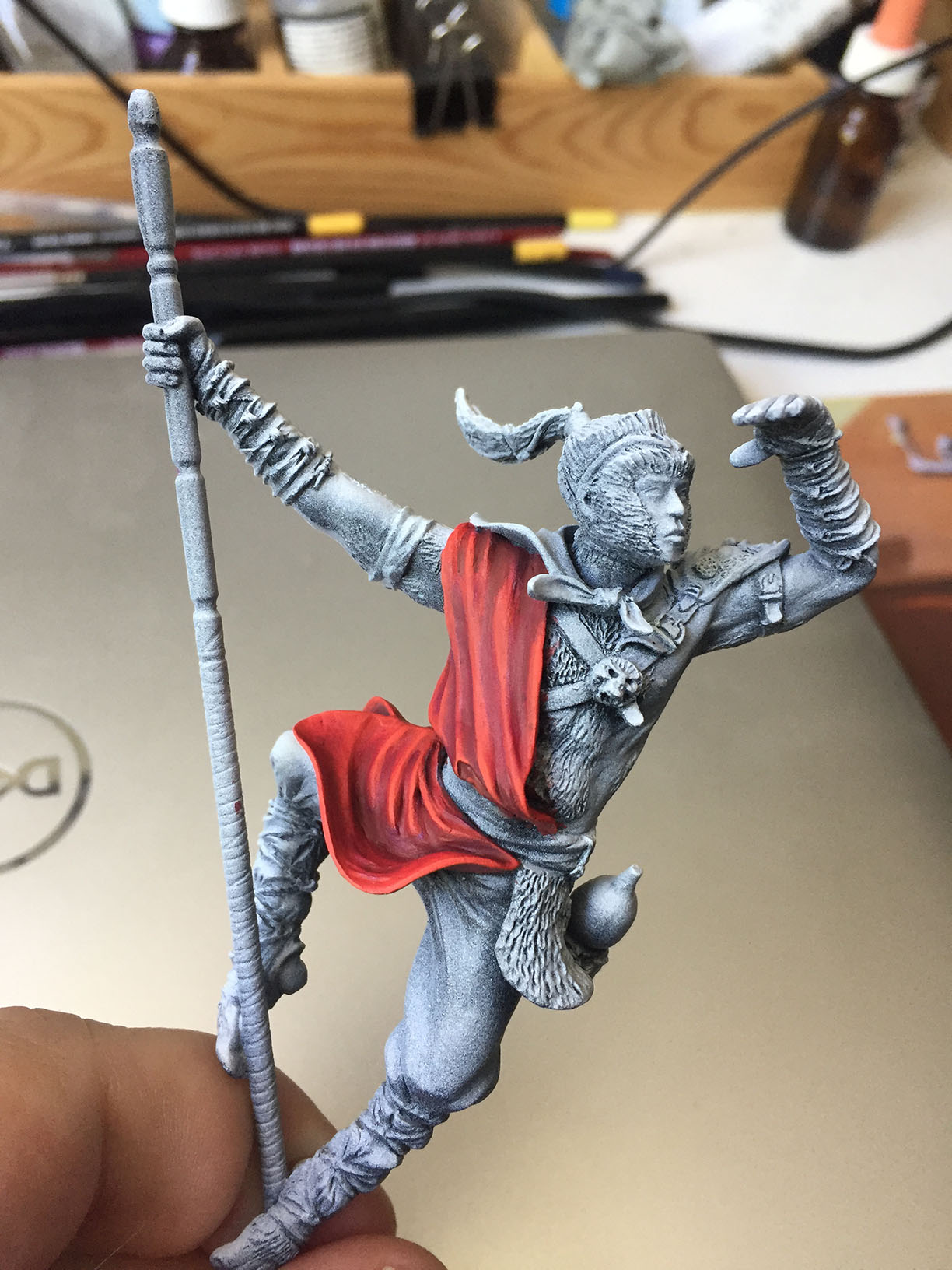
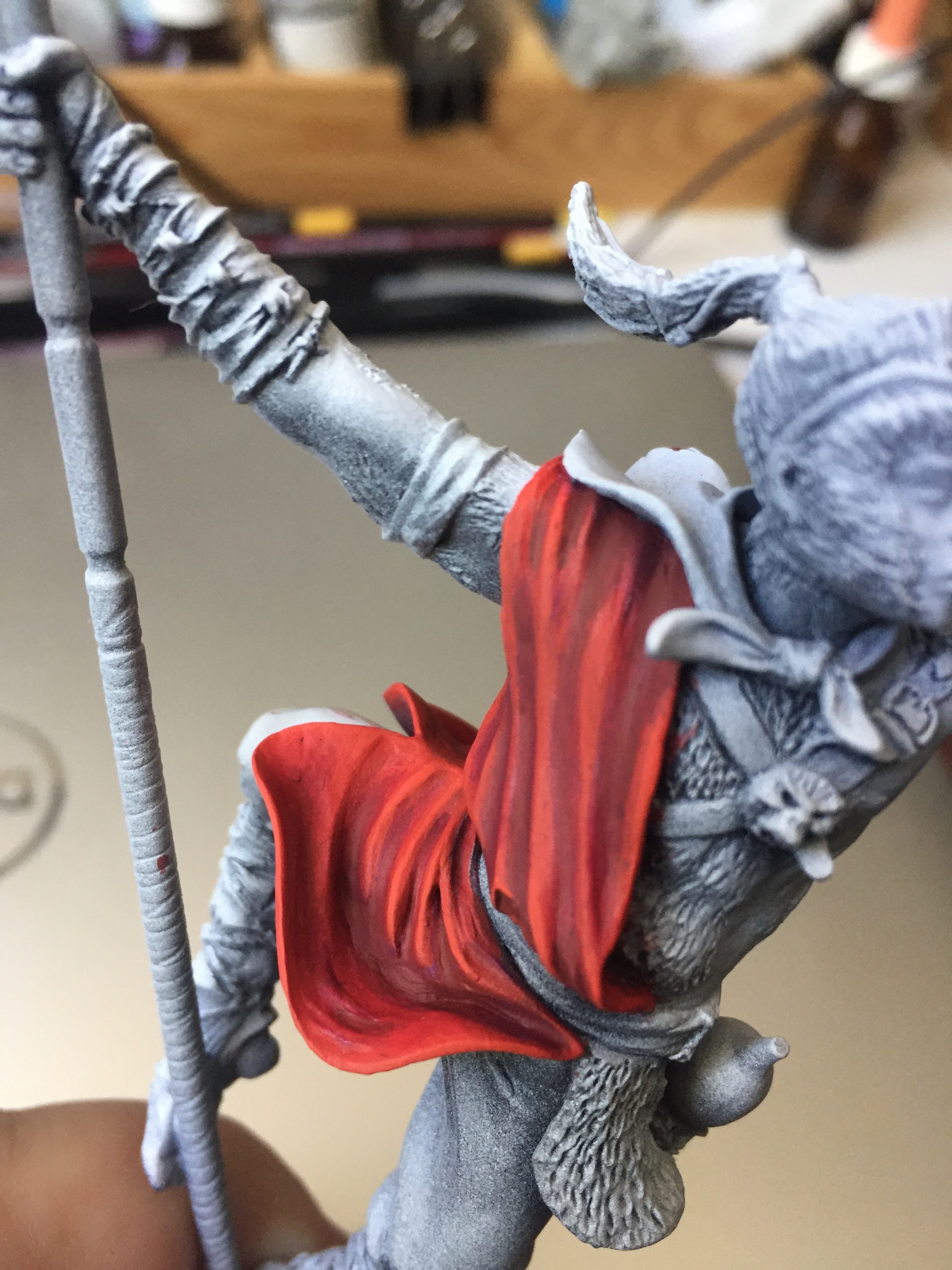
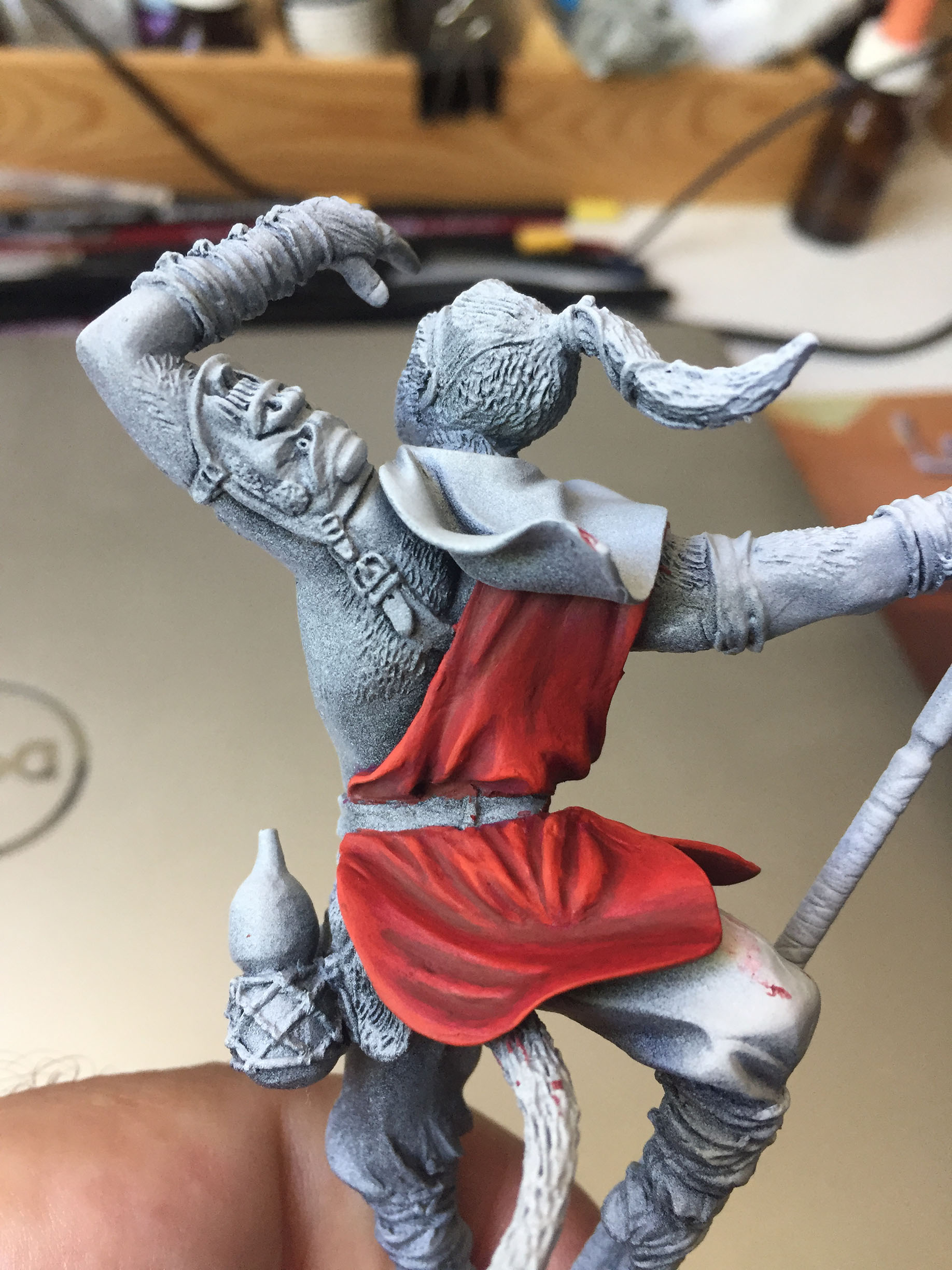
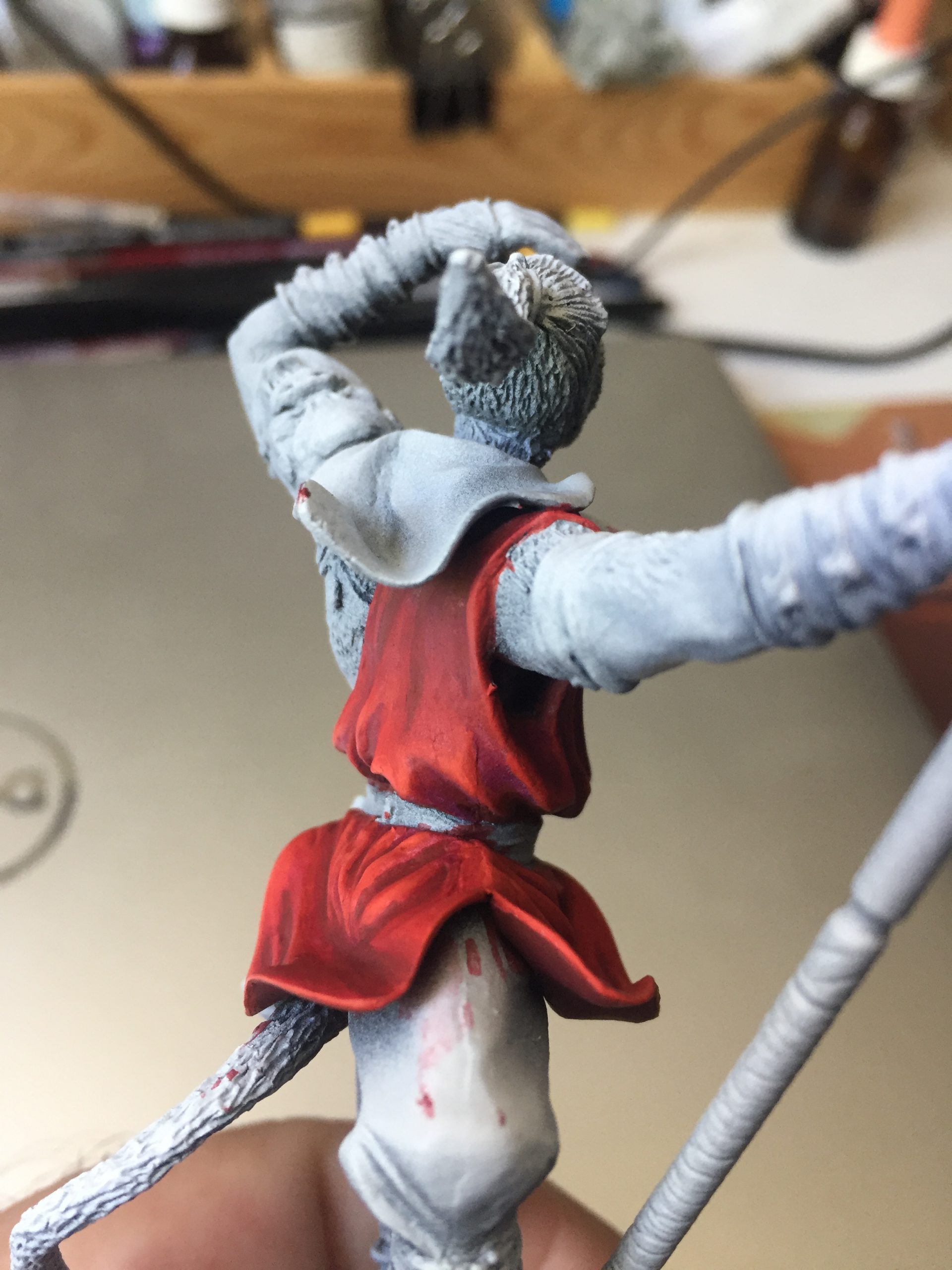
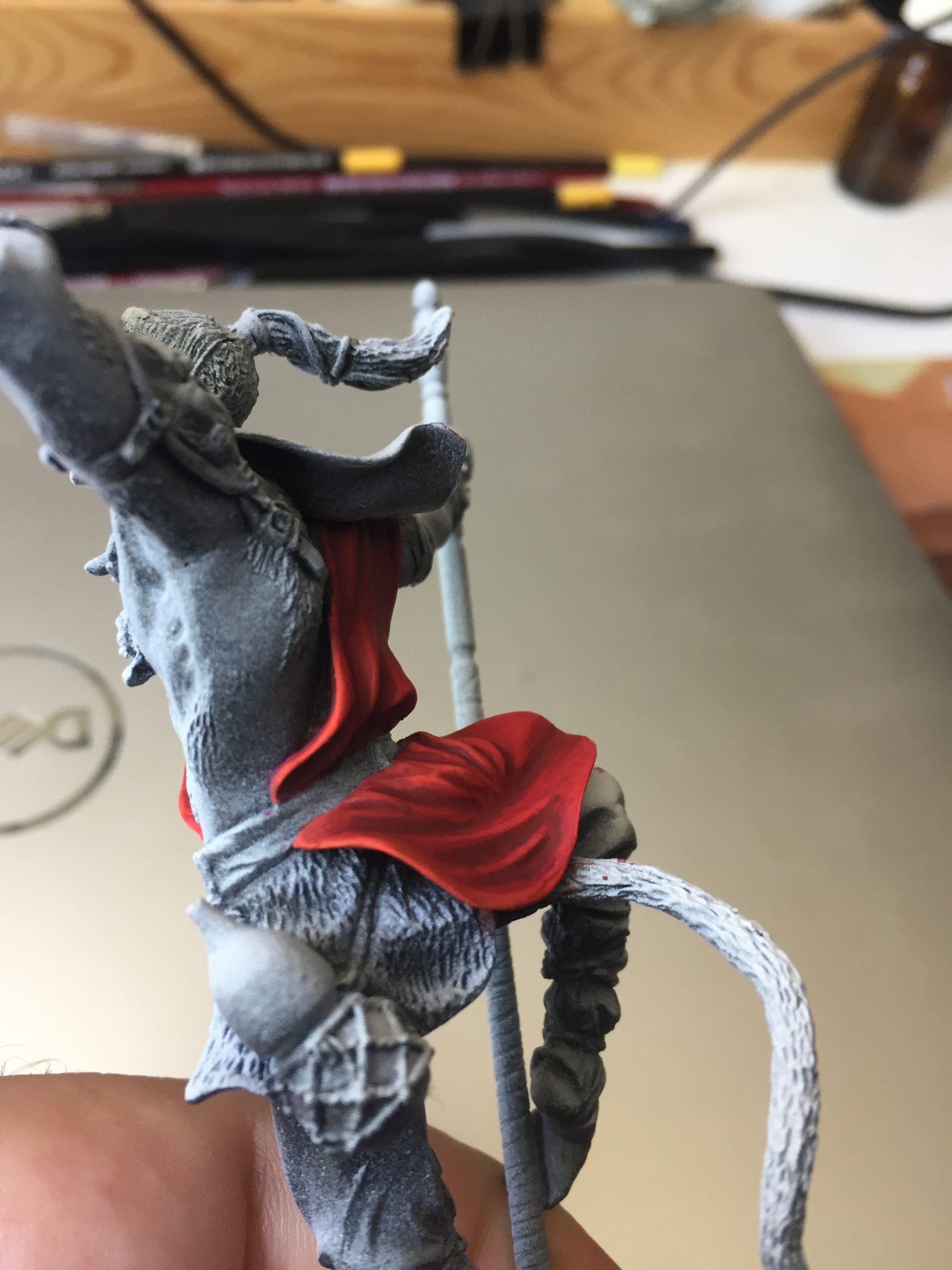
After a couple of hours, I called this step done, at least for now. I’m not entirely happy with the end result, so I’ll likely come back at a later date and give his tunic another pass. I’d like to push the highlights a little further, and smooth out some of the transitions and blends. As this session progress, I was getting tired (it was a midnight to 2am session) and getting sloppy. The pictures above aren’t a true indictation of the result; anyone who has photographed miniatures will tell you that photos like these only serve to highlight issues and mistakes; in the flesh the contrast isn’t quite as strong.
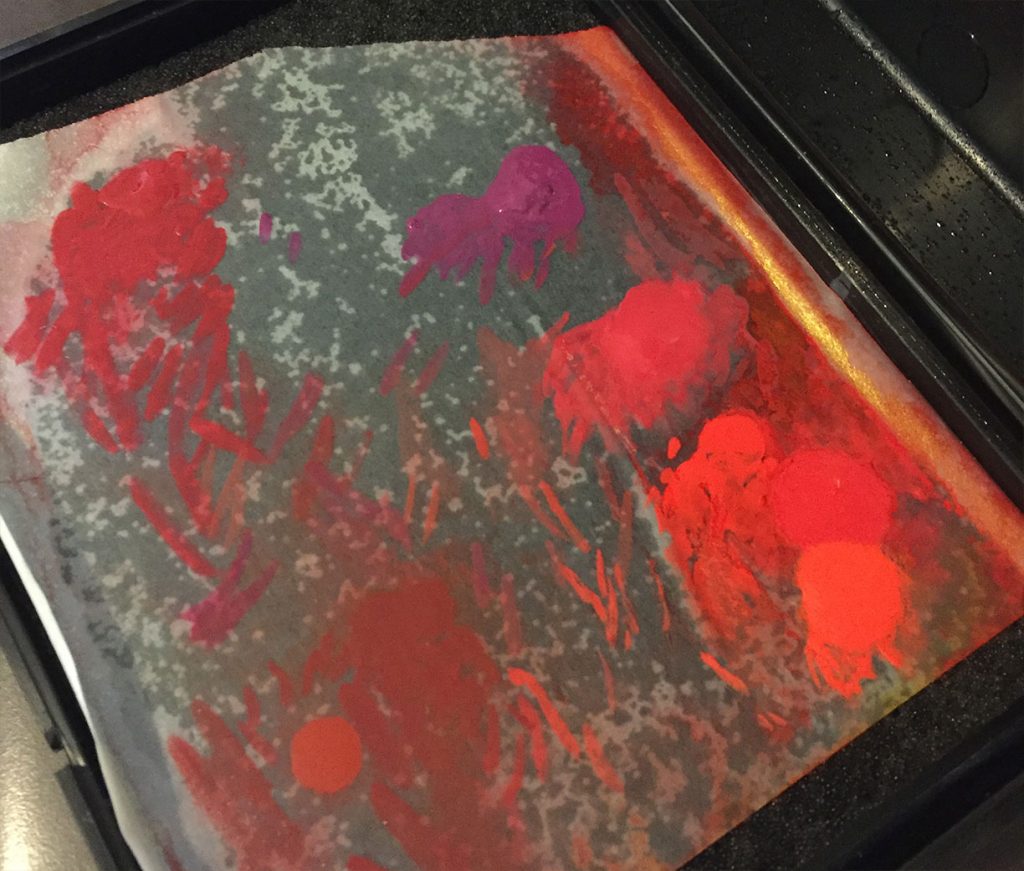
My wet palette the next day 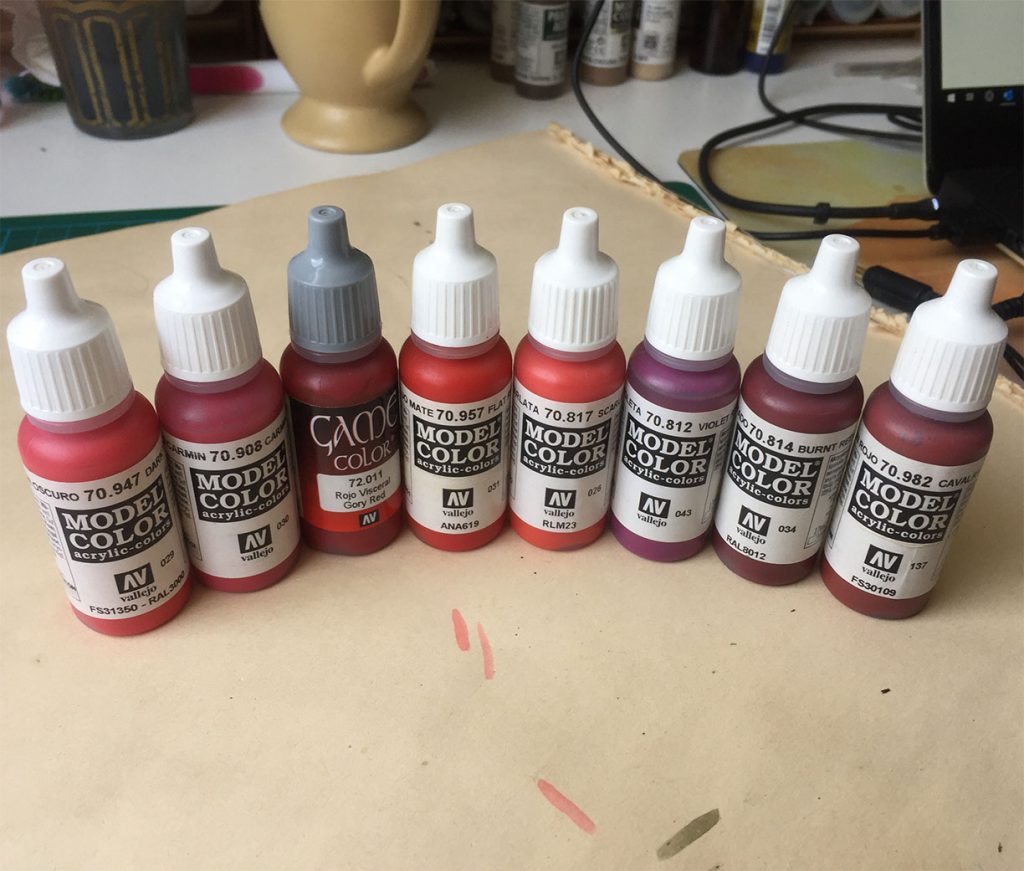
Paints used – purely Vallejo for this step 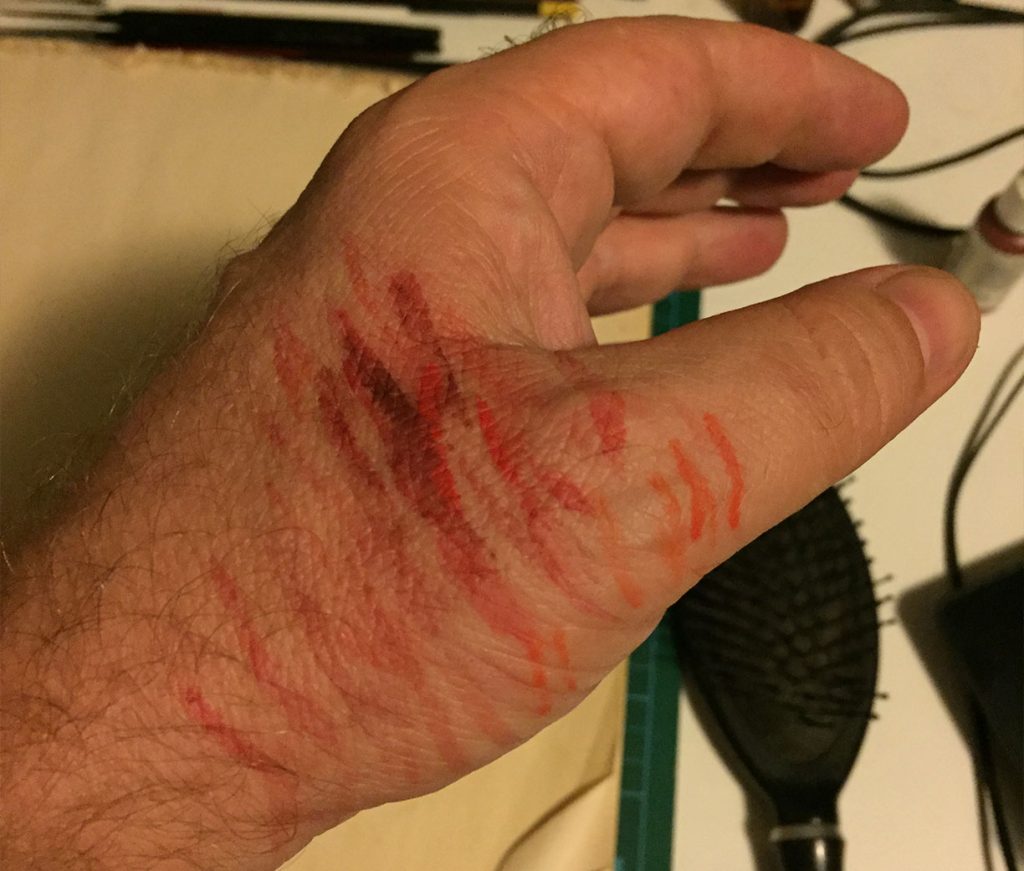
Sausage fingers. Yes, that’s my hairbrush
Regardless, the first step has been taken. Paint is flowing, albeit slowly. I’m trying my hardest to put aside the stupidly high expectations I set for myself, trying to let mistakes happen in order to prevent fear and apprehension building up to the point where I find it hard to sit down and paint.
Additionally, I have another completed blog post. Blogging about painting is an amazing tool to avoid actually painting. Its 1:30 on a Saturday afternoon and I want to devote the rest of the day to painting.
First I’m going to get a coffee.
Then I’ve got to do a bit of shopping.
And figure out what’s for dinner.
I think I have some gaming with mates pencilled in for tonight.
I’m the worst. Don’t be like me. Don’t procrastinate. And thin your paints.
More Monkey…
- The ashes before the phoenix rises
 Monkey King Part 4
- Lessons learned the hard way
 Monkey King Part 3
- Simply Red.
 Monkey King Part 2
- Born from an egg on a mountain top
 Monkey King Part 1